The “Good Enough Coach”: A Winnicottian Framework for Basketball Performance
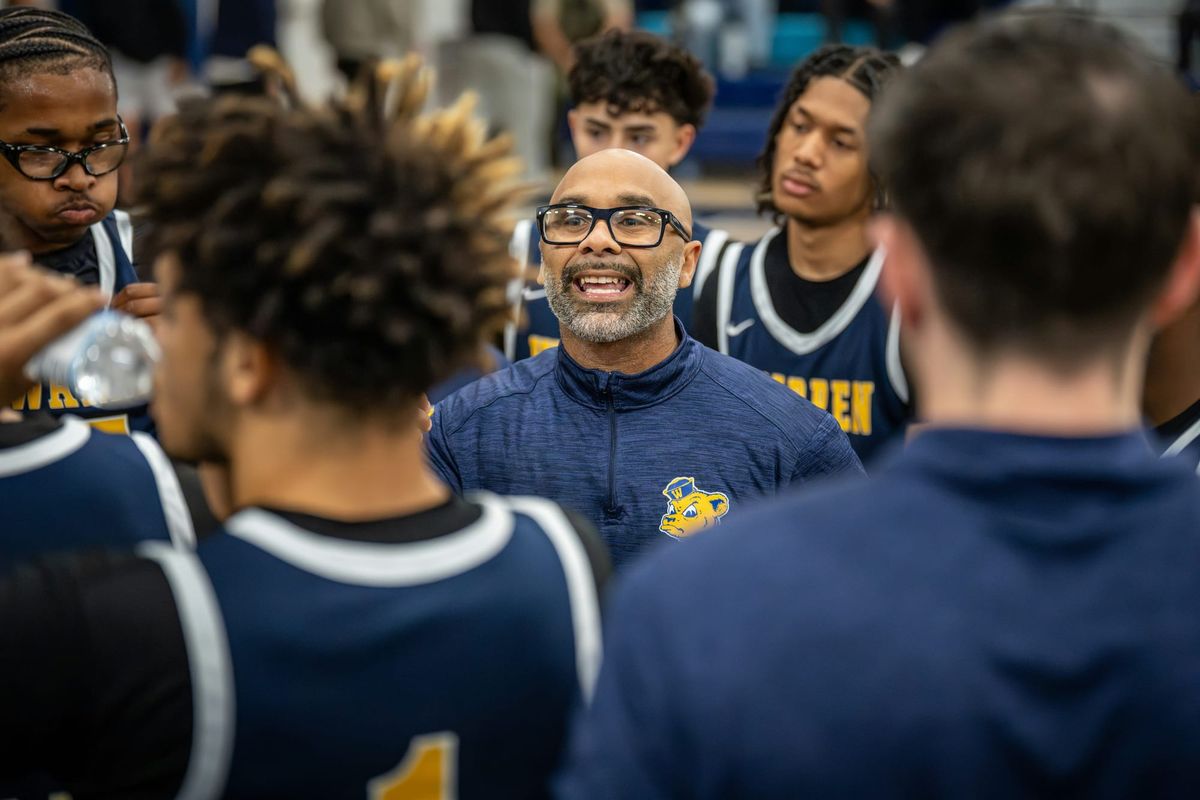
Performance emerges from the relationship, not the individual alone. There is no such thing as a player in isolation.
This idea, drawn from the psychoanalyst D.W. Winnicott’s assertion that “there is no such thing as a baby” without a mother, reframes how we understand athletic development. In basketball, the player does not exist apart from the environment.
Development is not an individual act; it is relational. The true unit of analysis is the coach-player relationship.
The Facilitating Environment
In this sense, the coach is not simply a strategist or authority figure. The coach is an environment.
Winnicott’s work shifted psychoanalysis away from the individual mind toward the relationship between the infant and caregiver. He described this as a “facilitating environment”—a psychological space that allows the individual to develop a sense of continuity, stability, and ultimately a “True Self.”
In basketball, the same structure applies. The coach and player form what might be called a “coaching couple,” a system in which the coach’s attunement directly shapes the player’s psychological development.
A “good enough coach,” like Winnicott’s “good enough mother,” is not perfect. Instead, the coach is reliably attuned: present, responsive, and capable of adapting to the player’s needs without overwhelming them.
This balance is what allows development to occur.
The Holding Environment
One of the central features of this relationship is what Winnicott called the “holding environment.” In early life, this refers to the caregiver’s ability to provide safety and containment, protecting the infant from what he termed “unthinkable anxiety.”
In basketball, the bench often becomes a literal and psychological extension of this holding environment. When a player is overwhelmed by frustration, aggression, or the emotional intensity of competition, the coach’s role is not to punish but to contain.
Benching a player, when done correctly, is not rejection. It is regulation. It creates space for the player to return to equilibrium. This reframes many common coaching behaviors:
- A pat on the shoulder.
- A calm acknowledgment (“I know you’re frustrated”).
- Maintaining connection while preserving structure.
The player remains within the environment rather than expelled from it.
The Stages of Growth
Development within this environment unfolds in stages.
- Subjective Omnipotence: Early in a player’s career, the environment is structured around the athlete. The system protects them. Success comes easily. This phase is not pathological; it is necessary for a coherent sense of self.
- The Spontaneous Gesture: As maturation occurs, the player begins to “surprise the world.” Creativity emerges. In basketball, this is visible in moments of instinctive play: a pass that wasn’t drawn up, a read that cannot be coached directly.
- Objective Reality: Eventually, the player encounters injury, loss, and failure. The illusion of control dissolves. This is often where psychological breakdown or transformation occurs.
A “good enough coach” survives this phase. When a player reacts with frustration, the coach does not retaliate or withdraw. Instead, they remain present.
The Threat of the "False Self"
In modern sport, this developmental process is increasingly disrupted. Name, Image, and Likeness (NIL) policies and the rise of athlete-as-influencer introduce a new layer of psychological complexity.
Athletes are now required to manage a public identity before their internal identity is fully formed. From a Winnicottian perspective, this risks the development of a “False Self”—a performance-driven identity shaped by external demands rather than internal growth.
The role of the coach, therefore, becomes even more critical:
- Not as controller.
- Not as authoritarian.
- But as a stabilizing environment.
Repair and Play
Even mistakes can strengthen the system. Winnicott emphasized that development does not require perfection, but repair. A coach who acknowledges an error models resilience and psychological flexibility. This builds trust.
Ultimately, the healthiest teams preserve what Winnicott saw as the core of psychological life: the capacity to play. Play is where the “True Self” lives. It is the space where creativity, spontaneity, and integration occur. Modern sport risks corrupting this space—measuring, optimizing, and commodifying performance to the point that play becomes instrumental rather than intrinsic.
The “good enough coach” resists this. They protect the space of play. They create conditions in which the athlete can exist, not just perform.
In a landscape defined by pressure, exposure, and constant evaluation, this may be the most important function of all. The goal is not perfection.
It is continuity of being.